
I remember the exact moment college felt like an impossible dream. I was sitting at our kitchen table, the linoleum worn thin, listening to my parents whisper about bills. My high school counselor had just given me a glossy brochure for a state university, and all I could see were the dollar signs screaming from every page. Tuition, room, board, books – it was a mountain of money that our family, living paycheck to paycheck, simply didn’t have. My heart sank. How could I even think about higher education when putting food on the table was already a daily struggle?
For so many of us growing up in financially tight circumstances, the idea of college feels like a cruel joke. You work hard in school, you dream big, but then reality hits you with the cold, hard truth: education costs money, a lot of it. My biggest fear wasn’t failing a class; it was the crushing debt that I imagined would follow me for the rest of my life, a burden I couldn’t bear to place on my already struggling family. I almost gave up before I even started.
But then, something shifted. It wasn’t a magic wand, but a quiet conversation with my history teacher, Mr. Harrison. He saw the flicker of ambition in my eyes, even when I tried to hide it. "You know, there are ways," he said, leaning back in his chair, "scholarships. Grants. Money specifically for students like you, who have the drive but not the endless pockets." I was skeptical. It sounded too good to be true. Money just given away? For me? But his words planted a tiny seed of hope, a fragile sprout in the concrete of my doubts.
That’s where my journey began – a journey I want to share with you, because if I could find a path through that financial jungle, so can you. This isn’t just about applying for scholarships; it’s about believing you deserve the chance, understanding the process, and fighting for your future with every fiber of your being.
The First, Crucial Step: Understanding Financial Aid
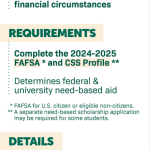
Before I even typed "scholarships for low-income students" into a search engine, Mr. Harrison insisted I fill out the Free Application for Federal Student Aid, or FAFSA. Honestly, the name alone sounded intimidating, like something only a financial wizard could understand. But he explained it simply: "It’s the key that unlocks most of the money out there, especially for students from families with less income."
I remember sitting down with my parents, a mountain of tax documents spread across the kitchen table. It felt overwhelming, like deciphering an ancient script. But we took it one question at a time. The FAFSA asks about your family’s income, assets, and other financial information. This data is then used to calculate your Expected Family Contribution (EFC), which isn’t what your family will pay, but what the government thinks they could contribute. For low-income families, this EFC is often very low, sometimes even zero.
And that, my friends, is gold. A low EFC qualifies you for federal grants, like the Pell Grant, which is money you don’t have to pay back. It was like finding a twenty-dollar bill in an old coat pocket – a genuine, no-strings-attached gift to help pay for college. The FAFSA also determines your eligibility for other federal student aid, including work-study programs and federal student loans (which, thankfully, I tried to avoid as much as possible, but they’re there if you need them).
My advice? Don’t let the FAFSA intimidate you. Your high school counselor, a college financial aid office, or even online resources can walk you through it. It’s the absolute foundational step. Without it, you’re missing out on a huge chunk of potential funding. And remember, it opens doors not just to federal money but often to state and institutional aid as well.
The Great Scholarship Hunt: Where to Look When You Have Nothing to Lose
Once the FAFSA was done, the real hunt began. I used to think scholarships were only for straight-A students with perfect SAT scores and a long list of impressive achievements. I wasn’t that kid. I was a decent student, worked part-time, and volunteered a bit, but I wasn’t a prodigy. What I learned, though, is that scholarships are for everyone. There are scholarships for every background, every interest, every quirk you can imagine.
My search started broadly, and then I narrowed it down. Here’s where I looked, and where you should too:
-
Online Scholarship Databases: Websites like Fastweb, Scholarship.com, Cappex, and College Board’s Scholarship Search were my first stop. They’re like giant search engines for scholarships. You create a profile, input your information (GPA, interests, major, ethnicity, community involvement, even your family’s income level), and they match you with scholarships you might qualify for. Don’t get discouraged by the sheer number; just start clicking and exploring. I remember spending hours on these sites, feeling like an archaeologist digging for treasure.
-
Your High School Counselor: This person is a goldmine of local information. My counselor had a binder full of scholarships specific to our town, our county, and even our high school alumni association. These are often less competitive because fewer people know about them. Many local businesses, Rotary clubs, Lions Clubs, and community foundations offer scholarships to local students. These were some of the first ones I applied for and, thankfully, some of the first ones I won.
-
Colleges Themselves: Once I started applying to colleges, I realized many institutions offer their own scholarships, often based on financial need, academic merit, or specific programs. Make sure to check each college’s financial aid website and department pages. Sometimes, simply applying for admission automatically puts you in consideration for certain scholarships, but other times you need to fill out a separate application. Don’t assume anything; always ask!
-
Organizations Related to Your Interests or Background: Are you passionate about art? Look for art scholarships. Do you come from a specific ethnic background? Many organizations support students from those backgrounds. Are you interested in nursing, engineering, or teaching? Professional associations often have scholarships for future members. I loved writing, so I looked for essay contests and literary scholarships. Dig into what makes you you and search for scholarships that align.
-
Your Parents’ Employers or Unions: Many companies and labor unions offer scholarships to the children of their employees or members. It’s worth asking if this is an option for your family.
The key here is persistence. It’s like fishing: you cast your line many times, and you might not catch anything every time, but eventually, you will. I kept a spreadsheet of every scholarship I found, its requirements, deadlines, and my application status. Organization was crucial to avoid missing deadlines, which was a real fear for me.
Crafting Your Story: Making Your Application Shine
Finding scholarships is one thing; winning them is another. This is where you get to tell your story, and for low-income students, your story is often incredibly powerful. Scholarship committees aren’t just looking for perfect grades; they’re looking for resilience, determination, character, and potential.
-
The Essay: Your Voice, Your Truth. This was the part I dreaded most, but it became my most powerful tool. I wasn’t a fancy writer, but I had a story. Many scholarships ask for an essay about your challenges, your goals, or a significant experience. This is your chance to show them who you are beyond the numbers.
- Be Authentic: Don’t try to be someone you’re not. Write about your real experiences, your struggles, and how you overcame them. I wrote about the challenges of balancing school with a part-time job to help my family, and how that taught me responsibility and time management.
- Connect to the Scholarship: Research the organization offering the scholarship. What are their values? What kind of students do they want to support? Tailor your essay to show how your goals align with their mission.
- Show, Don’t Just Tell: Instead of saying, "I am determined," describe a time when you demonstrated determination. Instead of "I need money for college," explain how college will transform your life and allow you to contribute to your community.
- Proofread Relentlessly: A typo can make you seem careless. Read it aloud. Ask a trusted teacher, friend, or mentor to read it. I had Mr. Harrison read every single one of my essays, and his feedback was invaluable.
-
Recommendation Letters: Choose Your Champions Wisely. Most scholarships will ask for one or two letters of recommendation. Don’t just pick the teacher who gave you the highest grade. Choose teachers, counselors, employers, or community leaders who know you well and can speak genuinely about your character, work ethic, and potential.
- Ask Early and Politely: Give them plenty of time, ideally a few weeks before the deadline.
- Provide Information: Remind them of specific projects, classes, or interactions you had. Give them your resume, a list of your achievements, and information about the scholarship itself and why you’re applying. Make it easy for them to write a strong letter for you.
- Follow Up and Thank Them: A polite reminder a week before the deadline is fine. And always, always send a thank-you note, regardless of the outcome.
-
Transcripts and GPA: Not Always the Whole Story. While grades are important, don’t let a less-than-perfect GPA deter you. Many scholarships consider your overall profile. If your grades aren’t stellar, focus on highlighting other strengths: your improvement over time, your commitment to extracurriculars, your work experience, or specific challenges you’ve overcome that impacted your academic performance. Use your essay to provide context if needed. I knew my GPA wasn’t top-tier, so I made sure my essays and recommendations painted a picture of a hardworking, dedicated student with real-world experience.
-
Extracurricular Activities and Volunteer Work: Beyond the Classroom. Scholarship committees want to see that you’re a well-rounded individual who contributes to your community. Whether it’s playing a sport, joining a club, volunteering at a local shelter, or even caring for younger siblings while your parents work, these experiences demonstrate leadership, teamwork, empathy, and responsibility. Don’t underestimate the value of these things. Even if your "extracurricular" was working part-time to help your family, frame it as a demonstration of responsibility and dedication.
The Waiting Game and Dealing with "No"
Applying for scholarships is a long game. You’ll send out dozens of applications, and you’ll get far more rejections than acceptances. I remember checking my email constantly, the pit in my stomach growing with each "We regret to inform you…" message. It’s easy to get discouraged, to feel like you’re not good enough, or that the whole system is rigged.
But here’s the secret: every "no" just brings you closer to a "yes." Each rejection was a chance to refine my essay, to search for new opportunities, to learn what committees might be looking for. I started seeing it less as a personal failure and more as part of the process.
And then, one day, it happened. An email popped up, not with a regretful tone, but with congratulations. I had won a local community scholarship, enough to cover my books for the first year. The relief that washed over me was immense. It wasn’t the full tuition, but it was a start, a tangible sign that my efforts weren’t in vain. It fueled me to keep going. More acceptances followed, some small, some larger, piecing together a mosaic of funding.
Piecing It All Together: The Financial Aid Puzzle
Very few students get one scholarship that covers everything. For most of us, it’s about stacking different sources of funding:
- Pell Grants: These federal grants were the foundation of my financial aid package.
- Institutional Grants/Scholarships: The university I chose offered its own grants based on my FAFSA and academic profile.
- Outside Scholarships: These were the scholarships I won from local organizations, online databases, and specific interest groups.
- Work-Study: I participated in a federal work-study program, which allowed me to earn money on campus to cover living expenses without having to take out more loans. It was a great way to gain experience and manage my schedule.
- Student Loans (As a Last Resort): I only took out the absolute minimum in federal student loans, which have better terms than private loans. My goal was always to minimize debt.
By combining these sources, I was able to cover the vast majority of my college costs without drowning in debt. It wasn’t easy, and it required constant vigilance, but it was possible.
Beyond the First Year: Staying on Track
The scholarship journey doesn’t end after your freshman year. Many scholarships are renewable, meaning you can get them again each year if you maintain certain academic standards. Others are one-time awards. This means you need to keep searching and applying for new scholarships throughout your college career.
- Maintain Your Grades: If you have renewable scholarships, know their requirements and work hard to meet them.
- Stay Involved: Continue participating in extracurriculars, volunteering, or working. These experiences will be valuable for future scholarship applications.
- Utilize Your College’s Financial Aid Office: They are a fantastic resource for finding new scholarship opportunities, especially those specific to your major or department. They can also help you navigate any changes in your financial situation.
- Network: Talk to professors, mentors, and alumni. They might know about niche scholarships or opportunities you wouldn’t find otherwise.
My Message to You: Don’t Give Up
If you’re reading this and feeling that same dread I felt at my kitchen table, please hear me: your financial situation does not define your potential. It might make the path harder, but it doesn’t make it impossible. Your story, your resilience, your drive – these are powerful assets that many scholarship committees are eager to support.
It will take effort. It will take time. You will face rejections. But every application you send out is a step forward. Every essay you write is a chance to articulate your dreams. Every person you ask for a recommendation is someone who believes in you.
College isn’t just about getting a degree; it’s about transforming your life, opening new doors, and gaining the knowledge and skills to build a better future for yourself, your family, and your community. I am living proof that scholarships for low-income students are not just a myth; they are a lifeline. They are the bridge that connects aspiration with opportunity.
So, take that first step. Fill out the FAFSA. Start searching. Tell your story. Believe in yourself. Your future is waiting, and there are people and organizations out there ready to help you seize it. Go for it. You deserve it.