
I still remember the scent of freshly cut grass, the sting of sweat in my eyes, and the thunderous beat of my own heart in my ears. It was a late afternoon, the kind where the sun casts long shadows across the field, and I was pushing through the final set of drills. My legs burned, my lungs ached, but something else was burning brighter: a dream. A dream that wasn’t just about playing the sport I loved, but about getting an education, about a future that felt, at that point, financially out of reach for my family. That dream, for many of us, hinges on something truly remarkable: an athletic scholarship.
For years, I’d watched college games on TV, idolizing the athletes, imagining myself out there. But the reality of college tuition was a heavy cloud. My parents worked tirelessly, but sending me to a four-year university, especially with my aspirations to compete at a high level, seemed like a distant fantasy. That’s where the idea of an athletic scholarship first truly took root in my mind. It wasn’t just a way to play; it was the way to get an education, a chance to bridge the gap between passion and possibility.
So, what exactly is an athletic scholarship? At its simplest, it’s financial aid awarded to students primarily based on their ability and performance in a sport. It’s a deal: you commit to playing for a university, and they commit to helping pay for your education. This aid can cover anything from a small percentage of tuition to a full ride, which includes tuition, room and board, books, and sometimes even a stipend for personal expenses. It’s a game-changer, a golden ticket for thousands of young men and women every year.
Now, why would anyone even bother pursuing one of these? Well, beyond the obvious financial relief – and believe me, that relief is immense – it’s about opportunity. It’s the chance to continue playing a sport you love at an incredibly competitive level, pushing your limits against other dedicated athletes. It’s about being part of a team, building lifelong friendships, and representing a school with pride. For me, it was also about proving to myself that all those early mornings, late nights, and sacrifices weren’t in vain. It was about earning a future through sheer grit and dedication.
My journey started much like many others: with a lot of hope and very little concrete knowledge. I was good at my sport, yes, but "good" in high school is a far cry from "good enough" for college athletics. The first step was research. I spent hours online, poring over university websites, trying to understand the different athletic divisions. This is where things get a little technical, but it’s crucial for any aspiring student-athlete.
You’ve likely heard of the NCAA, or the National Collegiate Athletic Association. This is the big one, divided into three main divisions:
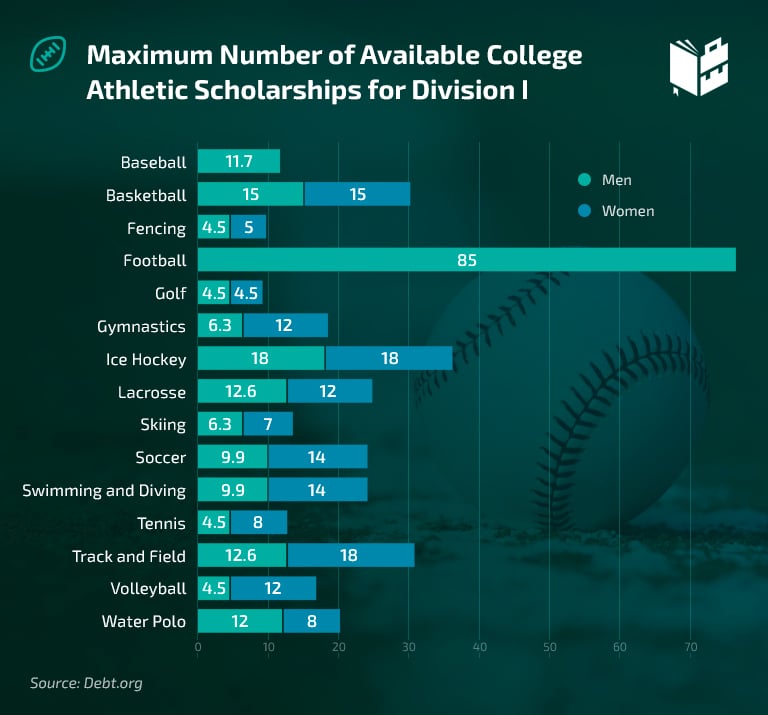
- Division I (D1): This is the highest level of collegiate athletics, known for its intense competition, large stadiums, and often, significant media coverage. D1 schools typically offer the most athletic scholarships, often full rides, especially in what are called "head count" sports like football, men’s and women’s basketball, and women’s gymnastics. In "equivalency" sports, scholarships can be divided among many athletes. The academic requirements are strict, and the commitment is incredibly demanding.
- Division II (D2): Still very competitive, D2 offers a balance between athletics and academics. Scholarships are available, though usually not as many full rides as D1. It’s often a great fit for athletes who want to compete at a high level but perhaps also have more time for other college experiences.
- Division III (D3): Here’s the key difference: D3 schools do not offer athletic scholarships. Let me repeat that – no athletic scholarships. However, they can offer significant academic scholarships and financial aid based on need. Many D3 schools have fantastic athletic programs, and for some athletes, the chance to play while prioritizing academics or a more traditional college experience is perfect. I knew a few friends who chose D3 and absolutely loved it because the pressure was different, allowing them to truly enjoy their sport without the intense financial strings attached to performance.
Beyond the NCAA, there’s the NAIA (National Association of Intercollegiate Athletics), which comprises smaller colleges and universities. The NAIA also offers athletic scholarships and provides a wonderful opportunity for many athletes to continue their careers. Their focus is often on a holistic student-athlete experience. Then there are NJCAA (National Junior College Athletic Association) schools, often two-year programs, which also offer athletic scholarships. Junior college can be a fantastic stepping stone, allowing athletes to develop their skills, improve their academic standing, and then transfer to a four-year program.
Understanding these divisions was my first major revelation. It helped me narrow down my search. I wasn’t necessarily D1 material, but I felt I had a strong chance at D2 or NAIA. This realism was important. It saved me time and focused my efforts.
The next step was perhaps the most daunting: getting noticed. How do you stand out among thousands of other aspiring athletes? This is where the "recruitment game" truly begins.
Building Your Profile: First, you need to create a comprehensive athletic resume or profile. This includes your academic transcripts (GPA and test scores like SAT/ACT are HUGE – coaches want students who can stay eligible!), your athletic stats, awards, a list of teams you’ve played for, and most importantly, a highlight video. My video was a carefully curated collection of my best moments – goals, assists, crucial defensive plays – all set to some upbeat music (a little cliché, maybe, but it worked!). Keep it concise, professional, and easy to watch. Coaches are busy; they don’t have time for a 15-minute documentary. A 3-5 minute reel is ideal.
Reaching Out to Coaches: This was the part that felt a bit like cold-calling. I researched coaches at schools I was interested in and started sending out personalized emails. And I mean personalized. Don’t just copy and paste. Mention specific things about their program, their team’s recent performance, or how you believe your skills align with their needs. Attach your profile and a link to your highlight video. Follow up politely if you don’t hear back. It takes persistence. I probably sent dozens of emails, and for every ten I sent, I might get one or two responses. It can be discouraging, but you have to keep pushing.
The Communication Game: Once a coach showed interest, the communication shifted. Phone calls, more emails, sometimes even social media messages. They wanted to know about my character, my work ethic, my academic commitment. They’d ask about my aspirations, my attitude towards teamwork, and how I handled adversity. Remember, coaches aren’t just recruiting athletes; they’re recruiting future members of their team and their university community. Your personality, your coachability, and your academic integrity are just as important as your athletic prowess.
Visits and Offers: Eventually, if a coach was serious, an official or unofficial visit would be on the table. An unofficial visit is at your own expense, while an official visit is paid for by the university (usually limited to five per athlete for D1/D2). These visits are your chance to see the campus, meet the team, talk to professors, and get a real feel for the environment. It’s also the coach’s chance to see you in person, gauge your fit with the team, and sometimes even put you through a workout.
I remember my first official visit. It was exhilarating and a little overwhelming. I stayed in a dorm, ate in the dining hall, and attended a class. I talked to current student-athletes, asking them candid questions about time management, academic support, and team dynamics. This was my opportunity to interview them, just as much as they were interviewing me.
Then came the offers. When that first scholarship offer came in, it was surreal. It wasn’t a full ride, but it was substantial, covering a good chunk of tuition. It felt like years of hard work had finally paid off. Over the next few weeks, a few more offers trickled in, each with different financial packages and different team dynamics. It became a balancing act: weighing the athletic opportunity against the academic program, the campus culture, and, of course, the financial aid.
What do coaches really look for? Beyond raw talent, which is a given at this level, coaches are looking for several key things:
- Academics: I cannot stress this enough. If you don’t meet academic eligibility requirements, no coach can offer you a scholarship. Period. Strong grades open doors.
- Character and Attitude: Are you a good teammate? Do you take criticism well? Are you respectful? Coaches want players who will contribute positively to the team culture.
- Coachability: Are you willing to learn and adapt? Can you take instructions and apply them?
- Work Ethic: Are you willing to put in the extra hours, in practice and in the weight room? Are you self-motivated?
- Fit: Do your skills complement the team’s needs? Do you fit their system? Do you seem like someone who would thrive in their specific program?
- Leadership: Do you lead by example? Do you encourage others?
I learned that coaches often "redshirt" players, meaning they delay their eligibility to play for a year to allow them to develop physically or academically. It’s a strategic move, and it’s something to discuss if it comes up. Also, scholarships aren’t always guaranteed for four years; they’re often renewed annually. Maintaining academic eligibility and good standing with the team is crucial.
The decision-making process was tough. I weighed pros and cons, talked endlessly with my parents and high school coach. Ultimately, I chose a D2 school that offered a generous partial scholarship and had an academic program I was genuinely excited about. The coach seemed to truly care about his athletes as people, not just players. It felt right.
Life as a Student-Athlete: Receiving the scholarship was just the beginning. The reality of being a student-athlete is intense. Imagine juggling a full course load, daily practices, strength and conditioning sessions, team meetings, travel for competitions, and trying to maintain some semblance of a social life. Time management becomes an art form. I lived by my planner. Every hour was accounted for. Early mornings in the weight room, classes, practice, then study hall late into the night. It was exhausting, exhilarating, and incredibly rewarding.
There were moments of doubt, of course. Injuries are always a risk, and I had my share of minor ones that tested my resilience. There were academic pressures, moments when I felt overwhelmed by deadlines and exams. There were times I missed my family and the comfort of home. But through it all, my teammates became a second family, and my coaches were mentors who pushed me to be better, both on and off the field.
My scholarship wasn’t just about paying for college; it was about the structure it provided, the discipline it instilled, and the incredible network of support it offered. The academic advisors for athletes were invaluable, helping me choose classes and manage my schedule. The trainers kept me healthy. The entire athletic department was invested in my success.
Tips for Aspiring Student-Athletes:
- Start Early: Don’t wait until your senior year. Coaches often identify prospects in their sophomore or junior year of high school.
- Excel Academically: Your grades are your ticket to even being considered. Prioritize them as much as your sport.
- Be Proactive: Don’t wait for coaches to find you. Reach out to them.
- Create a Professional Highlight Video: Keep it short, sweet, and showcasing your best plays.
- Be Realistic: Understand the different divisions and where your talent truly fits.
- Visit Campuses: Get a feel for the school, the team, and the coach.
- Ask Questions: Don’t be afraid to inquire about scholarship details, team culture, academic support, and coaching philosophy.
- Be a Good Person: Character matters. Coaches are looking for athletes who will be positive contributors.
- Stay Persistent: The recruitment process can be long and full of rejections. Don’t give up.
- Enjoy the Process: It’s a unique opportunity. Savor every moment.
Receiving an athletic scholarship was a pivotal moment in my life. It opened doors I never thought possible. It taught me about perseverance, teamwork, and the power of dedication. It didn’t just fund my education; it shaped my character, broadened my horizons, and gave me an incredible four years of college experiences that I wouldn’t trade for anything.
If you’re out there, a young athlete with a burning passion for your sport and a dream of higher education, know this: it’s achievable. It takes immense effort, talent, and a little bit of luck, but it’s a path worth exploring. Work hard, stay focused, and believe in yourself. Your shot at glory, your chance at that scholarship, might be closer than you think. And when that moment comes, when you sign on the dotted line, you’ll know that every drop of sweat, every early morning, and every sacrifice was absolutely worth it.